The Perfect Friend Doesn’t Exist (And That’s Okay)

“Do you want to come over to my house after swimming?” I asked the girl I had met at the public pool. She was about my age, maybe a year younger, and we had been playing together in the water all afternoon—the only thing to do in a small town on a hot summer day when you’re nine years old. “I think my mom made chocolate cake… we could probably have some,” I added.
It was the first time, at least that I can remember, that I had the courage to ask a new friend to hang out.
“No,” she said. “I can’t.”
No explanation. Just no.
“Okay…” I said quietly, disheartened by her response. I never asked her to hang out again. Looking back now, I’m sure there were a hundred possible reasons she said no—maybe she had plans, maybe her family was going somewhere—but at that age, I didn’t have that kind of perspective—or resilience, apparently.
Growing up, making friends didn’t always come naturally to me. I was pretty shy and introverted, and for most of my childhood and teenage years I typically had one or two really close friends at a time rather than a big circle—usually because an outgoing person decided to adopt me, and I had no choice.
I remember wishing I could befriend someone who was just like me. Someone who shared all the same interests, laughed at the same jokes, liked the same food, and wanted to do the same activities. Someone I could talk with for hours and hours without ever feeling uncomfortable. I imagined it would be so much easier—like we would just understand each other perfectly.
At the time, I thought that’s what friendship was supposed to feel like.

Growing Into Friendships
That understanding didn’t shift overnight.
I started to come out of my shell more after high school. Instead of going to college right away, I joined an international volunteer organization that exposed me to people from all kinds of cultures, backgrounds, and personalities—and gently pushed me out of my comfort zone in the best way. Over time, I began to feel more secure in myself and more aware of what I had to offer.
People would tell me I was kind, funny, and thoughtful, that I was a good listener and easy to be around. At the same time, I knew I had areas I needed to grow in, too. I needed to learn to open up more and let others in, and to be careful not to use humor to minimize or deflect certain situations. I wanted to show more empathy, too—really be present for those in the ways they needed me.
Even as I became more comfortable meeting new people, my friendship style didn’t change all that much. I still tended to keep one or two very close companions at a time, rather than a wide circle.
Interestingly, my name actually means “friend” in Hebrew. Though “Ruth” is often translated as “friend” or “companion,” there isn’t really a perfect English equivalent. The word carries a deeper idea of loyal companionship—of walking alongside someone through life.

Between my tendency to befriend more extroverted people, my habit of keeping one or two close friendships at a time, and my natural inclination toward deep companionship (perhaps living up to the meaning of my name), I grew comfortable in that dynamic.
For a long time, it worked. And there’s nothing wrong with having one or two close friends—those deep relationships are often the most meaningful.
It works especially well when you’re in environments where you see the same people every day—classrooms, shared living spaces, group activities.
But eventually, that structure disappears.
People move away, get married, start careers, or have children—and life begins pulling everyone in different directions.
And suddenly the quiet question becomes: Where does that leave me?
For a moment, it brought back the same uncertainty I felt as a kid trying to figure out how friendships even begin.

Branching Out
At first, I found these adjustments difficult to make. I talk about this a bit in my blog, “Babies & Bachelorettes…”
There were moments when I felt slightly out of sync with some of my closest friends as our lives started to move in different directions. Not necessarily left behind, but not quite in step the way we once had been. As life evolves, availability, capacities, and schedules naturally rearrange themselves.
But I’m not one to dwell for too long in circumstances I can’t change.
So I became determined to branch out and make all kinds of different friends—sometimes reconnecting with old ones along the way.
Work friends. Weekend friends. Friends who want to go out, and others who would much rather stay in.
Married friends. Single friends. Friends with kids.
Adventure buddies. Philosophical friends. Spiritual friends. Non-religious friends.
Some friendships lasted. Others faded away. Some were meant for a season, others for a lifetime.
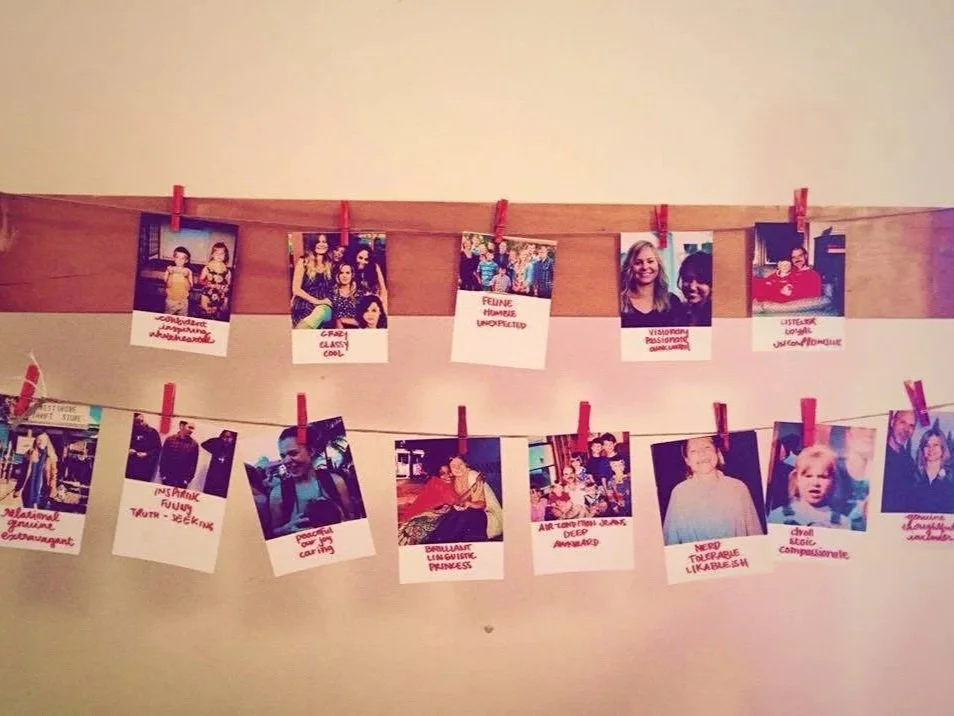
Over time, I started to realize something: the wisdom of diversification isn’t just for financial investments.
We hear it all the time when people talk about romantic relationships—that you can’t expect one person to meet all of your emotional, social, and personal needs. The same is true of friendship.
I have different people I go to when I need to talk about certain things—people who I know will have the experience, understanding, or advice I’m looking for in that moment.
I know the person to go to when I need to hear the truth, no matter how hard it might be. And the one who will always make me feel better. The person I could tell literally anything to without fear of judgment. The friend I can talk to for hours, and the one I can call when I want to go out and have a fun, spontaneous night.
I still keep my two or three closest companions. But over time, I’ve grown my capacity for other levels of connection too.
Diversification doesn’t dilute the quality of these connections. Instead, it creates a greater sense of overall fulfillment.

People Don’t Sign Up For Your Expectations
Remember earlier when I said I used to wish for a friend who was just like me—because it would be so much easier?
I don’t think I’m totally alone in that thought.
It’s fairly common for people to want others to be like them—to move at the same pace of growth, have similar energy levels, share the same interests, be in the same stage of life, or see the world in similar ways. Someone like that would know exactly how to treat you.
But relationships rarely work that way.
The truth is, we often carry quiet expectations about how people should show up for us—how quickly they respond, how reliable they are, how consistent they act, or how emotionally present they should be when we’re going through something.
And sometimes, those expectations come from places deeper than we realize.
Often, the ways we most desperately want others to show up for us are connected to things we lacked at some point in our lives.
For me, reliability is a big one. I really value people who show up, follow through, communicate, and remain consistent. When those things don’t happen in the way that I want them to—even in small situations—I can find myself feeling unexpectedly hurt. Almost like I’ve been abandoned, even when the situation probably doesn’t warrant that level of emotion.

The tricky part is that the other person may have no idea that expectation even exists.
Of course, some of this can be solved through communication. Talking openly about needs, boundaries, and expectations can go a long way in strengthening any relationship. But even with the best communication, people are still human. They’re imperfect. They have their own lives, their own priorities, and their own emotional capacities.
Some of the things I was hoping others would provide were things I had to learn to give myself. I had to learn how to work through disappointment—not placing the blame entirely on someone else’s inability to meet my expectations, but taking responsibility for my own emotional health.
As a child, I often turned inward in moments of confusion, difficulty, or distress. It became a coping mechanism—one that kept me from reaching out for support or allowing myself to be vulnerable.
Over time, as I grew and healed, I began to understand that pattern wasn’t always healthy or sustainable for building lasting relationships. But what started as a coping mechanism slowly evolved into something more intentional: learning how to understand myself on a profound level, identify my emotions, and show up for myself first—while also learning when it was wise to reach out and invite others in.

Start With Yourself
“We try to resource from other people the most, the things we struggle to self-source.” —Thais Gibson
I recently watched a Jay Shetty podcast interview with relationship expert and creator of Integrated Attachment Theory, Thais Gibson.
She gave a name to the very coping-mechanism-turned-skill I’ve been describing: “self-sourcing.”
Self-sourcing means learning to meet your own needs—especially those tied to old wounds—and becoming your own caregiver, which leads to deeper healing. It also relieves the pressure we may have unknowingly placed on others—friends, partners, co-workers, family members—expecting them to fill needs we hadn’t yet learned to meet ourselves.
One simple way Thais suggests practicing self-sourcing is through self-validation: training yourself to notice and celebrate your wins, big or small.
Another way that I learned to strengthen my relationship with myself is through the practice of self-acceptance.

In Atlas of the Heart, Brené Brown emphasizes that some of the main ways to combat shame are through self-compassion and empathy. I read this book during a particularly tumultuous time in my life. I had quit my full-time job to pursue self-employment, was going through a breakup, and was living in the spare bedroom of my best friends’ home while I figured it all out.
I was broke, confused, and full of “not good enough” feelings—struggling in my work, unable to make a relationship stick, and frustrated by the sense that no matter how hard I tried, I was getting nowhere.
During the long nights when anxious thoughts about my life kept me awake, I decided to put into practice what I was reading, and started catching those feelings of shame. And instead of spiraling, I gently told myself, “I accept you for this.” I acknowledged the reality of my situation as less than ideal, but met the self-doubt with empathy.
While I leaned heavily on my friends and family during that time, I also learned how to lean on myself—to accept who I was, exactly as I was, not the version I wished I could be. Right there, in the unglamorous struggle of it all.
I showed up for myself in the ways I had been relying on others—and on my circumstances—to validate me.

Outgrowing The Expectation
In the end, I don’t need a perfect friend.
I don’t need someone who understands me completely or mirrors me in every way. I need different perspectives. I need to be challenged, supported, respected, and loved. I need people to laugh with, grow with, and walk alongside—even if we’re moving at different paces.
No one person is meant to be everything.
Some friends will understand certain parts of me deeply, while others won’t—and that’s okay. It’s not their job to know me completely. It’s mine.
And the more I’ve learned to understand myself—to meet my own needs, to validate my own emotions, to show up for myself—the more security I’ve found in my relationships.
That doesn’t mean there are never problems or moments of disappointment. But now, it’s about learning how to navigate them.
What did I need in that moment?
How can I show up for myself?
How can I communicate that clearly to someone else?
And then—move forward, with more understanding than before.
Learn how to meet yourself where you are—whether that’s through reflection, support, or simply giving yourself more compassion.
Then let your friendships be what they’re meant to be: support when you need it, honesty when it matters, laughter when life feels heavy, and connection—without the expectation of perfection.