The Way Back Home: A 12-Mile Walk Through Minnesota’s Iron Range
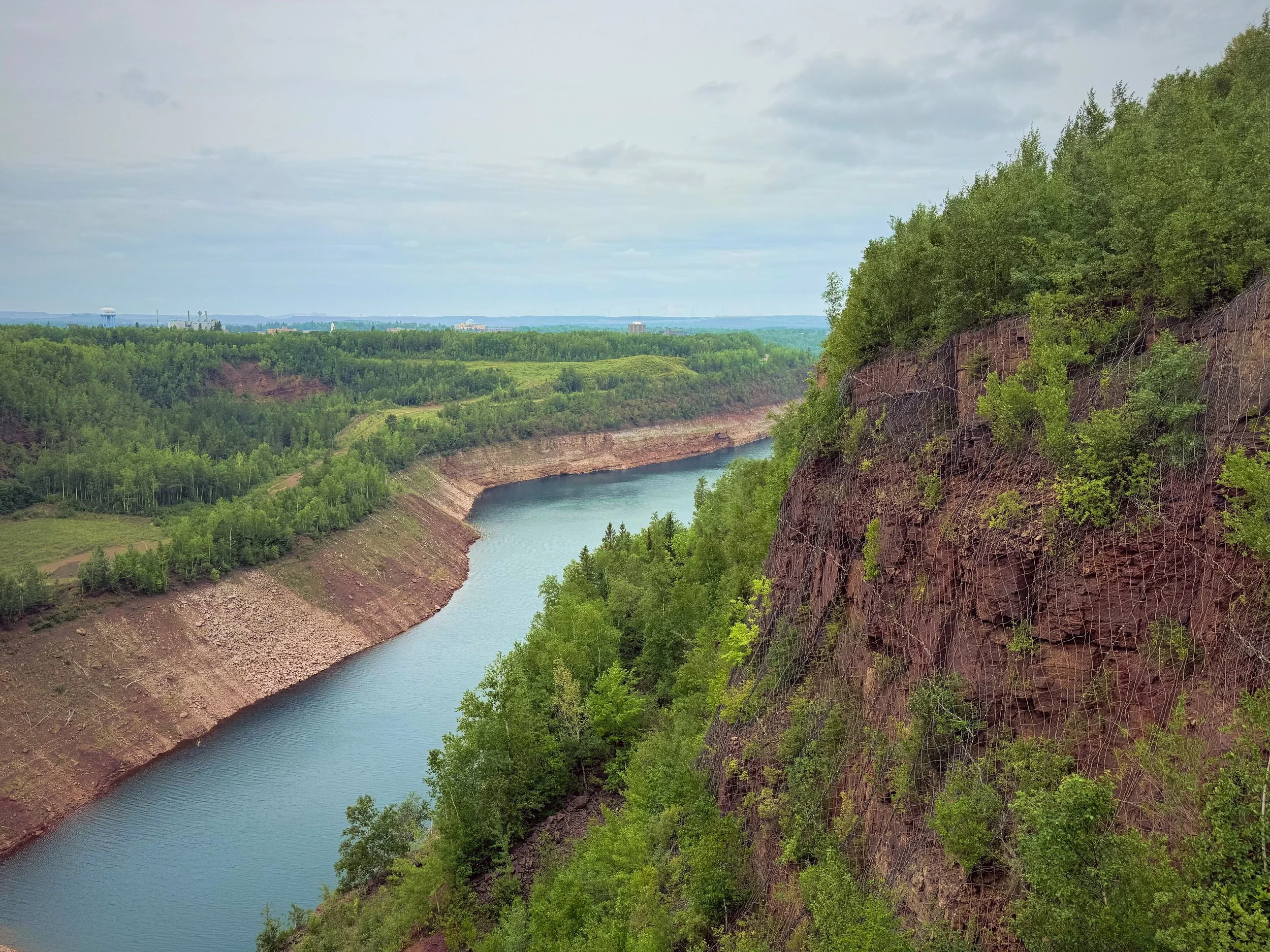
"This is our heritage."
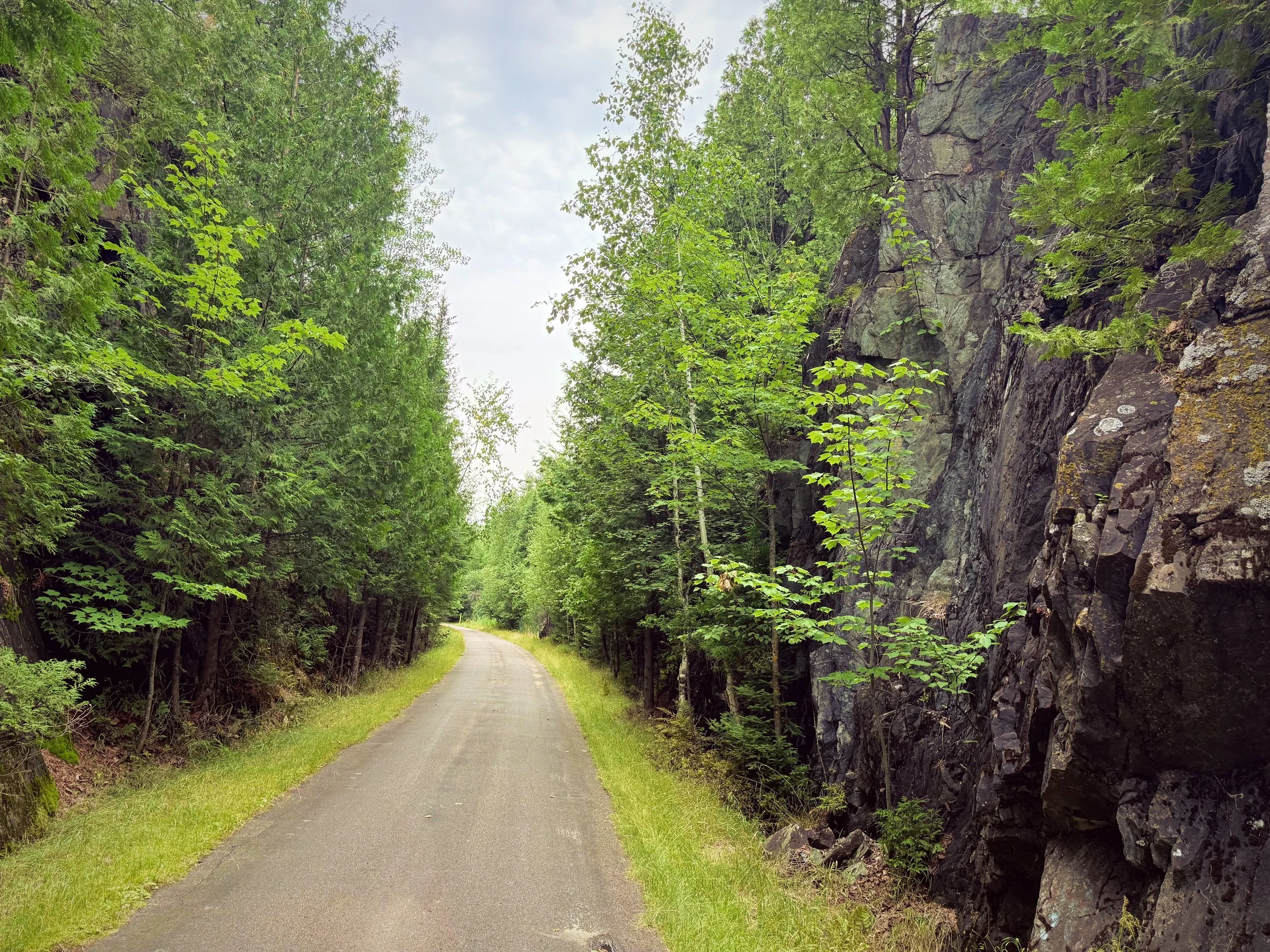
I'd say to my sister every time we rounded another bend along Highway 53, nodding toward the towering rock cuts that rose above the winding road through Minnesota's Iron Range.
"You said that last time we were here," she'd reply, half laughing, half annoyed.
"I know," I'd smile. "But it's true."
Even as a child, driving from North Dakota to visit family, northern Minnesota always felt a little mystical to me. As if those dark, ominous rocks and tall whispering pines held many secrets. I would watch steadily as we rounded every corner, wondering if those secrets would eventually reveal themselves.
But the mystery only grew.
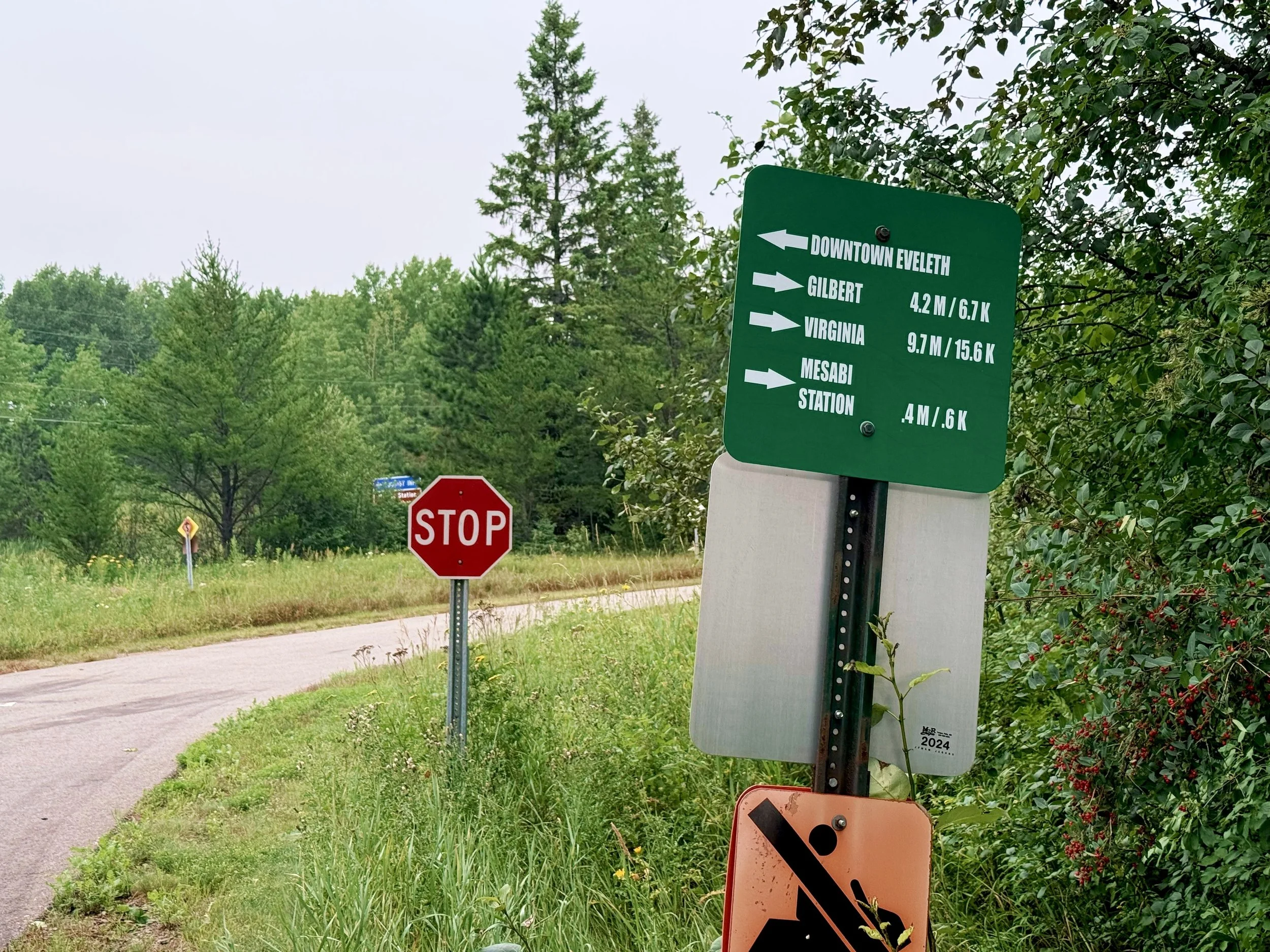
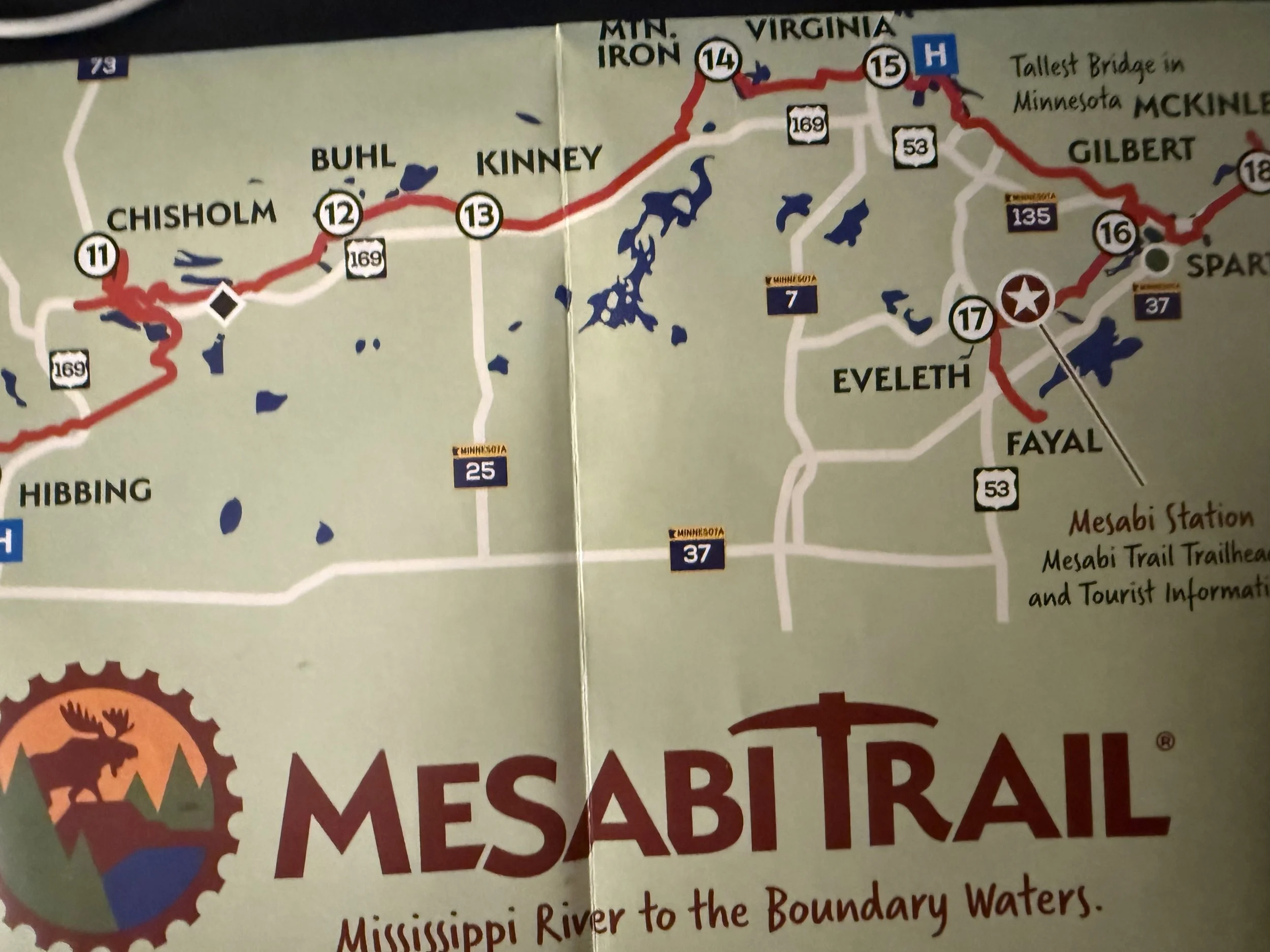
My mom and I found ourselves back in the North Country one month before our Camino trip.We were there to visit family, but we also had one important item on the agenda: a 12-mile training hike along the Mesabi Trail from Eveleth to Virginia, a trail that follows an old railway corridor that once carried iron ore through the Iron Range.
It would be our longest walk yet. With Spain just weeks away, it was time to find out whether we were really ready.
Before the Miles
“Your great-grandparents used to run that motel,” my mom pointed out as we drove through a little town on our way to my aunt and uncle’s place where we’d be staying.
“Oh, really?” I replied. “How’d they get into that?”
“Hmm…” She paused. “I guess I’m not quite sure. But I think it was only for a summer.”
This was how the trip unfolded—my mom pointing out the landmarks and recalling memories that had become part of her own history. The movie theater where she used to go with her friends. The lake she swam in as a little girl, its water a “root-beer brown” from the runoff of the iron ore.
“Your dad and I went on our first date in Grand Rapids. Did you know that?”
“Uh, I’m sure I’ve heard the story…”
“It was Fiddler on the Roof,” she continued. “We were going with a group of friends, and one by one, they all dropped out. It ended up being just the two of us.”
“It was meant to be,” I replied.
“We definitely thought so.”
I myself only lived in the area for the first five years of my life. Before we uprooted and moved to southwestern North Dakota, we lived in a little house in the country with a barn, barn cats, chickens, and a miniature pony named Dumpling who was blind in one eye.
My siblings and I played outside in the trees and dirt, and in the snow during the winter. I was young, but the landscape—and the memories and sentiment attached to it—imprinted themselves on me.
So much so that, whenever we'd make the eight-hour drive to visit family in the summer or around Christmas, something in me would begin to shift as we got closer. The trees would grow thicker, the roads would wind tighter, and I'd feel that familiar sense of home returning as we tunneled our way back to where it all began.
It was afternoon when my mom and I finally arrived in Virginia, Minnesota, at my aunt and uncle's house. We relaxed and visited for a while before crossing the street to my grandparents' place for dinner and more catching up.
Before heading to bed that night, we mapped out our hike using the Mesabi Trail, with my uncle helping us figure out the route.
“Twelve miles,” my mom said. “We'll get dropped off in Eveleth, stop in Gilbert for lunch about halfway through, and then finish back here in Virginia.”
“Sounds like a plan!” I said.
I wasn't entirely sure how twelve miles would go.
But tomorrow, we'd find out.
The Long Way to Virginia
The first four miles went by quickly. My mom and I chatted away as I soaked in the new path and scenery around us. I love seeing new sights, breathing different air, not fully knowing what I'm getting myself into.
It was the first overcast day in what felt like an entire month of ninety-degree, full-sun, high-humidity July weather. The heat broke like a fever, and we gladly welcomed the reprieve. Seventy-five degrees and cloudy suddenly felt like perfect hiking weather.
“In about two miles, we’ll get to Gilbert,” my mom said. “We can stop at Lake Ore-Be-Gone and dip our feet in the water.”
“That sounds amazing,” I said.
“It’s a mine pit,” she explained. “So the lake is mineral water.”
“Ohhh, I love that,” I replied.
“Then we’ll have lunch at the Wandering Pines.”
“The Whispering Pines?” I asked, only half listening.
“No. Wandering Pines.”
“Ohh, got it.”
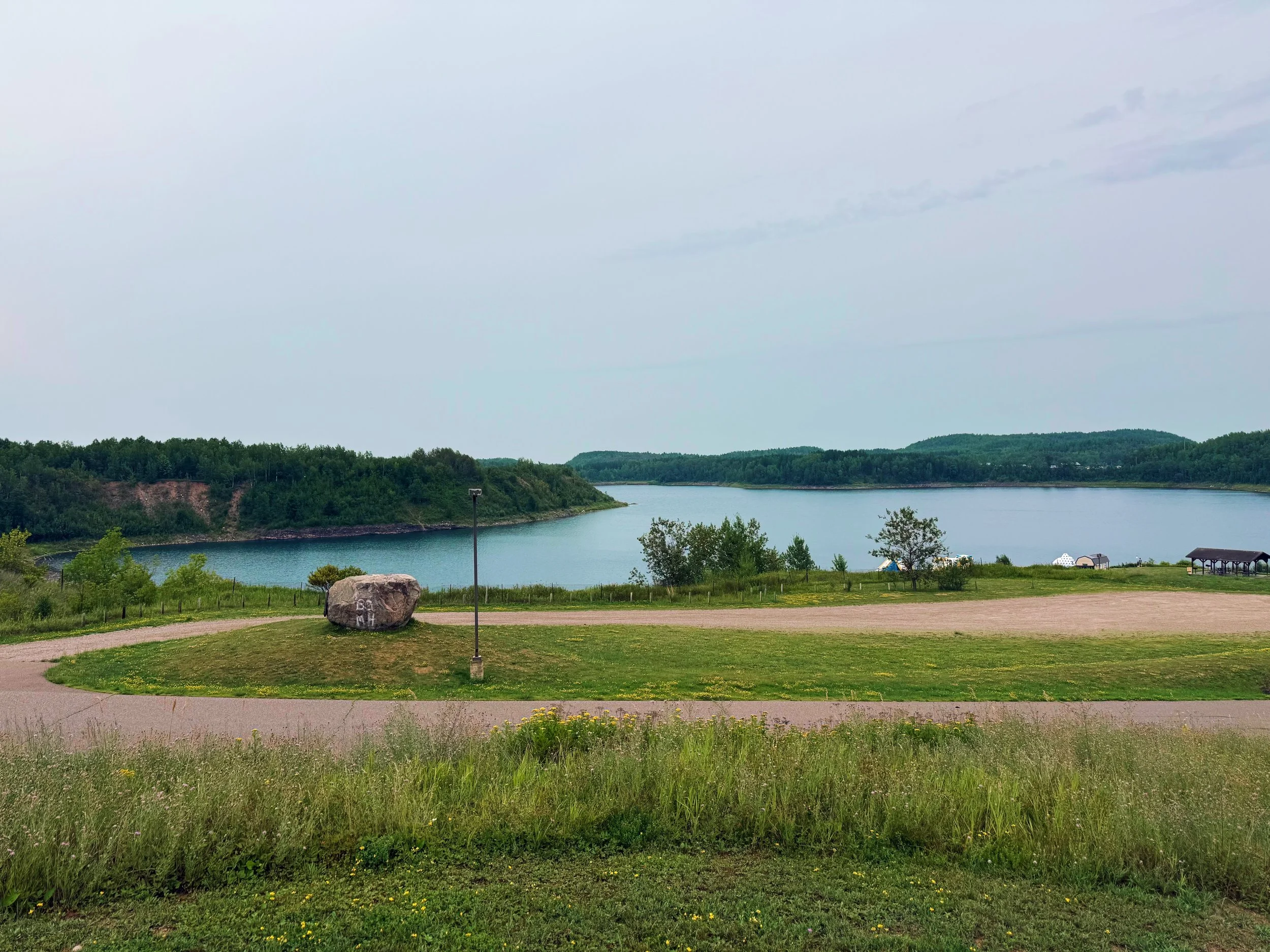
The lake was a welcome sight, as we made our way down the hill toward the beach.
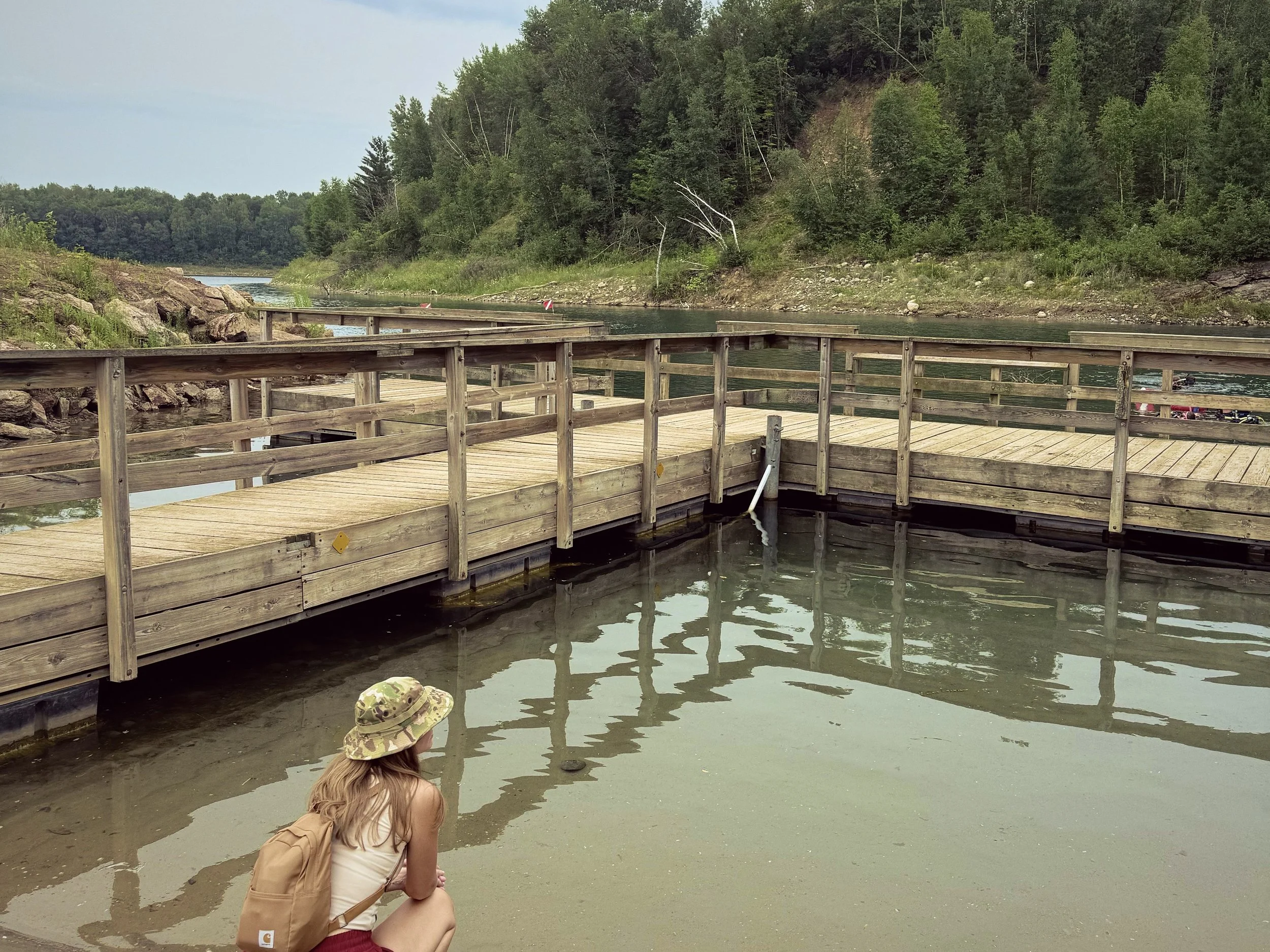
“That dock never used to be there,” my mom exclaimed, surprised. “This used to be all open beach for swimming.”
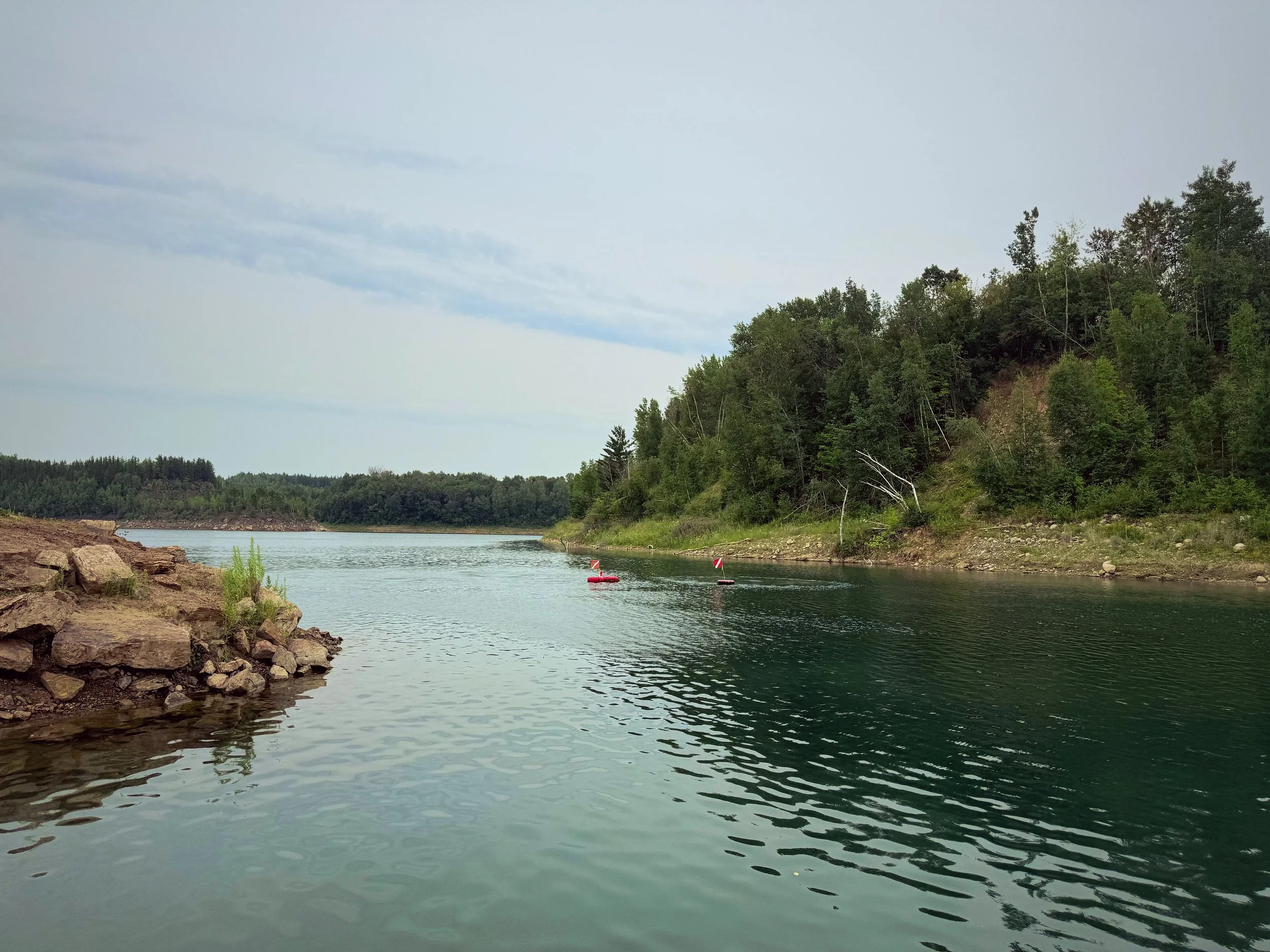
We drew closer to the water—its mesmerizing color sparkling like sea glass. Though completely natural, there was something almost otherworldly about it. It reminded me of the turquoise water of Lake Louise in Banff National Park, though not nearly as vivid.
We took off our socks and shoes and waded in up to our knees. Just beyond the end of the dock, a group of scuba divers were exploring the water. They told us there was an airplane, a train car, and other interesting artifacts hidden beneath the surface.
How mysterious, I thought.
After cooling off for a while, I sat on the edge of the dock and let my feet dry before putting my socks and shoes back on. The skin on the bottoms of my feet was still cracked and healing from a pretty bad eczema breakout a couple of weeks earlier, likely aggravated by the heat and humidity.
I'd actually had to stop training for about two weeks—one week to treat the breakout and another to let my skin heal.
I'd had eczema since I was a little girl. It started on the bottoms of my feet, and as I got older, occasionally showed up on the palms of my hands, too. When I was young, I was incredibly self-conscious about it. While everyone else would run barefoot through the grass in the summer, I worried someone would see the red, itchy, blistered skin and think I was disgusting.
In preparing for the Camino, the possibility of an eczema breakout hadn’t really crossed my mind until now. I’d need to bring prescription steroid cream, be extra mindful about taking care of my feet, and hope for the best. The last thing I wanted was to be sidelined—or spend the Camino suffering through a painful walk.
After lunch at the Whispering Wandering Pines, we stopped by my cousin’s ice cream shop in Gilbert to say hello and grab some ice cream for the road. I got two scoops of cookie dough in a waffle cone and savored every bite. It was tough to get going again after that. Our quick, consistent pace from the morning shifted into a slow drag through the long afternoon. Six miles still lay ahead of us.
My mom and I had filled four hours of drive time the day before with conversation, and the entire morning of our hike with even more. Now, we walked mostly in silence, occasionally pointing out something we heard or saw in the woods and making a comment about it.
“Do you want to listen to music?” my mom suggested after awhile.
“Sure!”
I had brought my AirPods, so we each took one. After scrolling through my music library, I decided to make her listen to Chopin, thinking the classical music would make a beautiful soundtrack to the woods around us.
It was beautiful.
But after a while, we decided we needed something a little more upbeat and switched to Taylor Swift instead.
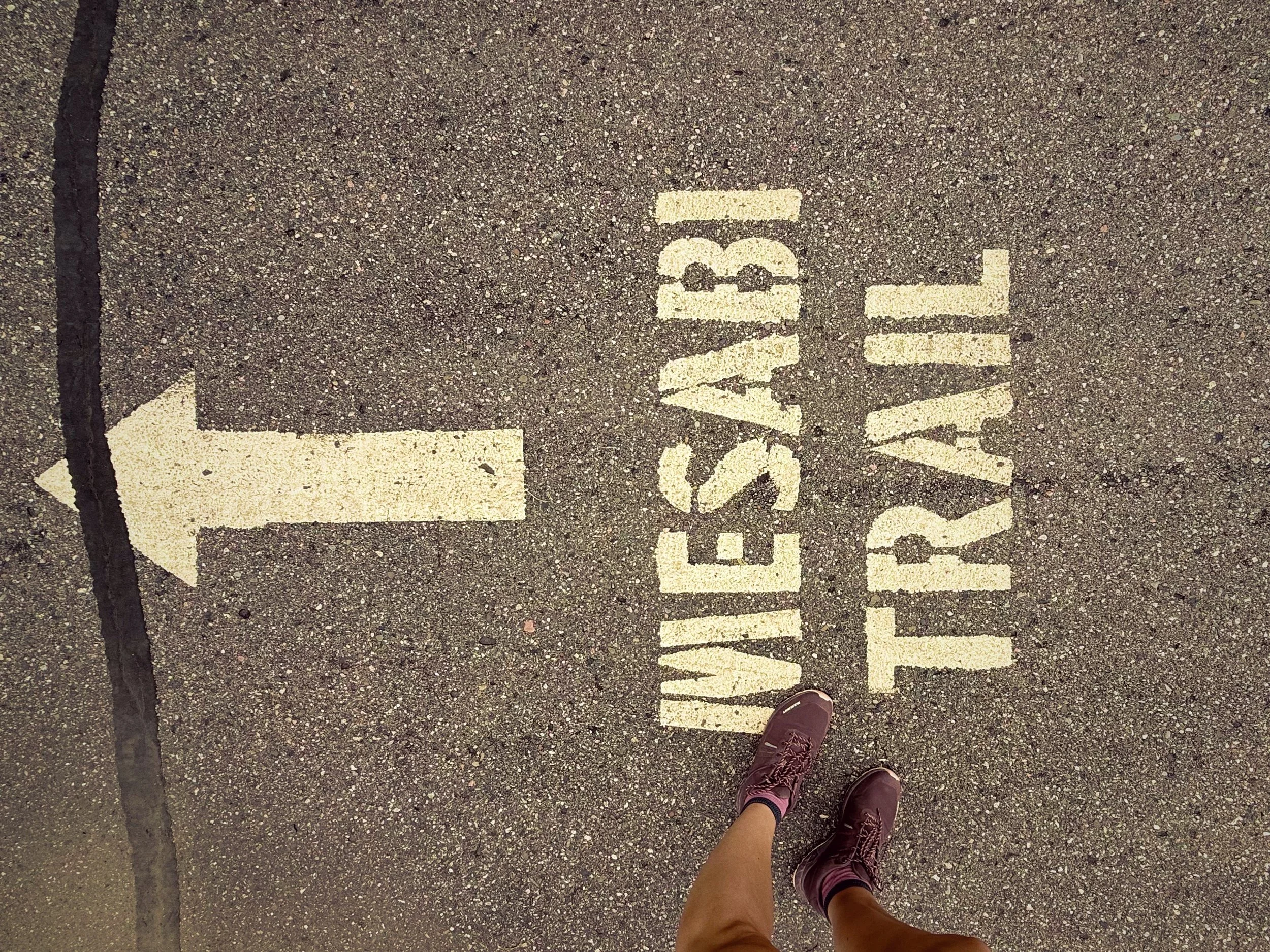
“How much farther till the bridge?” I asked my mom.
“Shouldn’t be too much farther now,” she said.
I kept thinking I could hear rushing water, imagining the Rouchleau Mine Pit and the Thomas Rukavina Memorial Bridge that marked our arrival into Virginia. The symbol of victory. My mom had promised me beautiful views from the bridge, and I held onto that promise the whole way.
Around the ninth mile or so, I could feel a rawness around my heel, where blisters were surely forming. Hot and irritated.
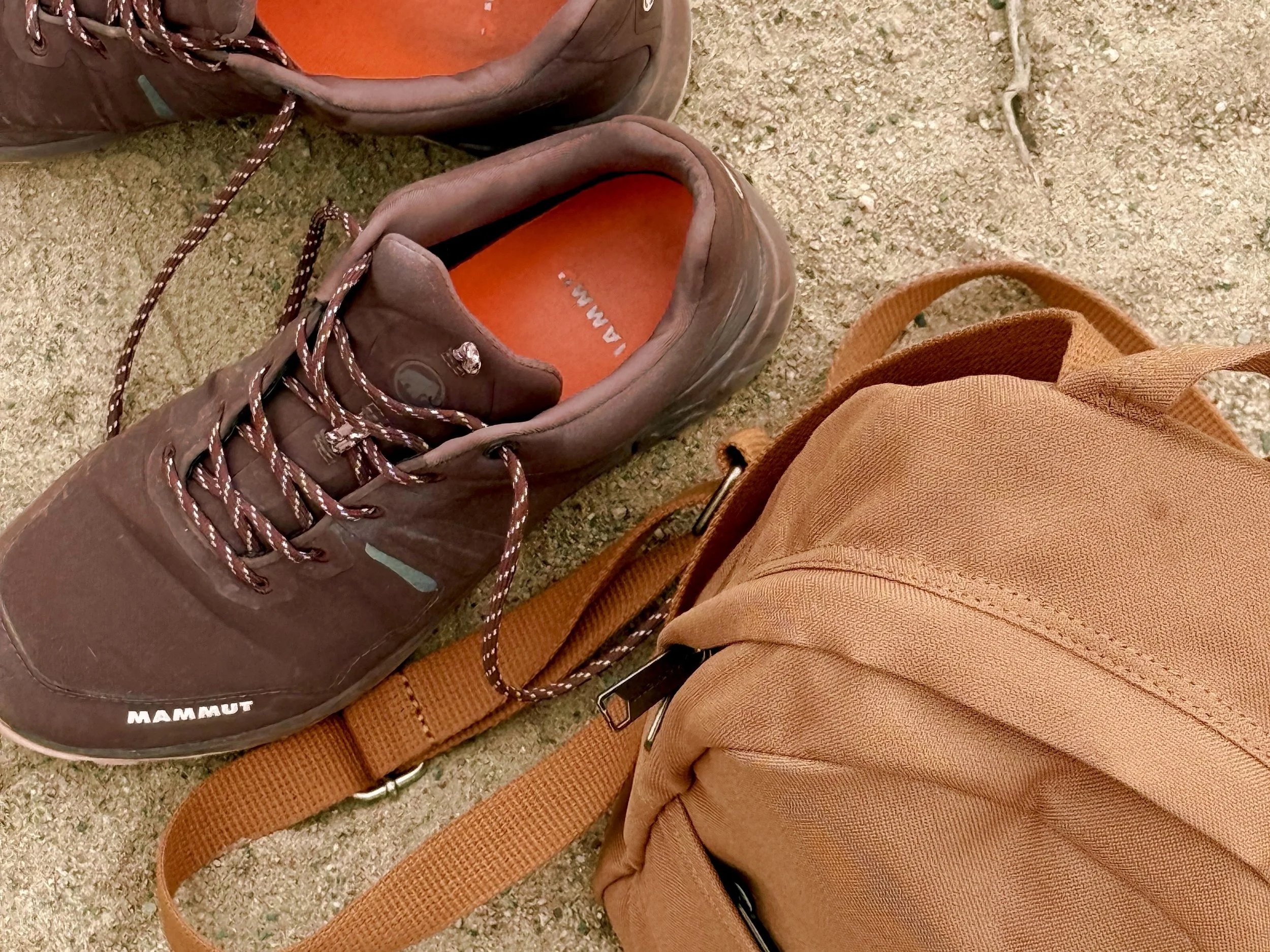
My mom voiced concern about my shoes, questioning whether they were really suited for this kind of activity.
“I don’t know,” I said. “They’re hiking shoes.”
“Yeah… they just felt kind of firm to me when I tried them on.”
“Maybe the socks I’m wearing are too thin.”
“Could be,” she said.
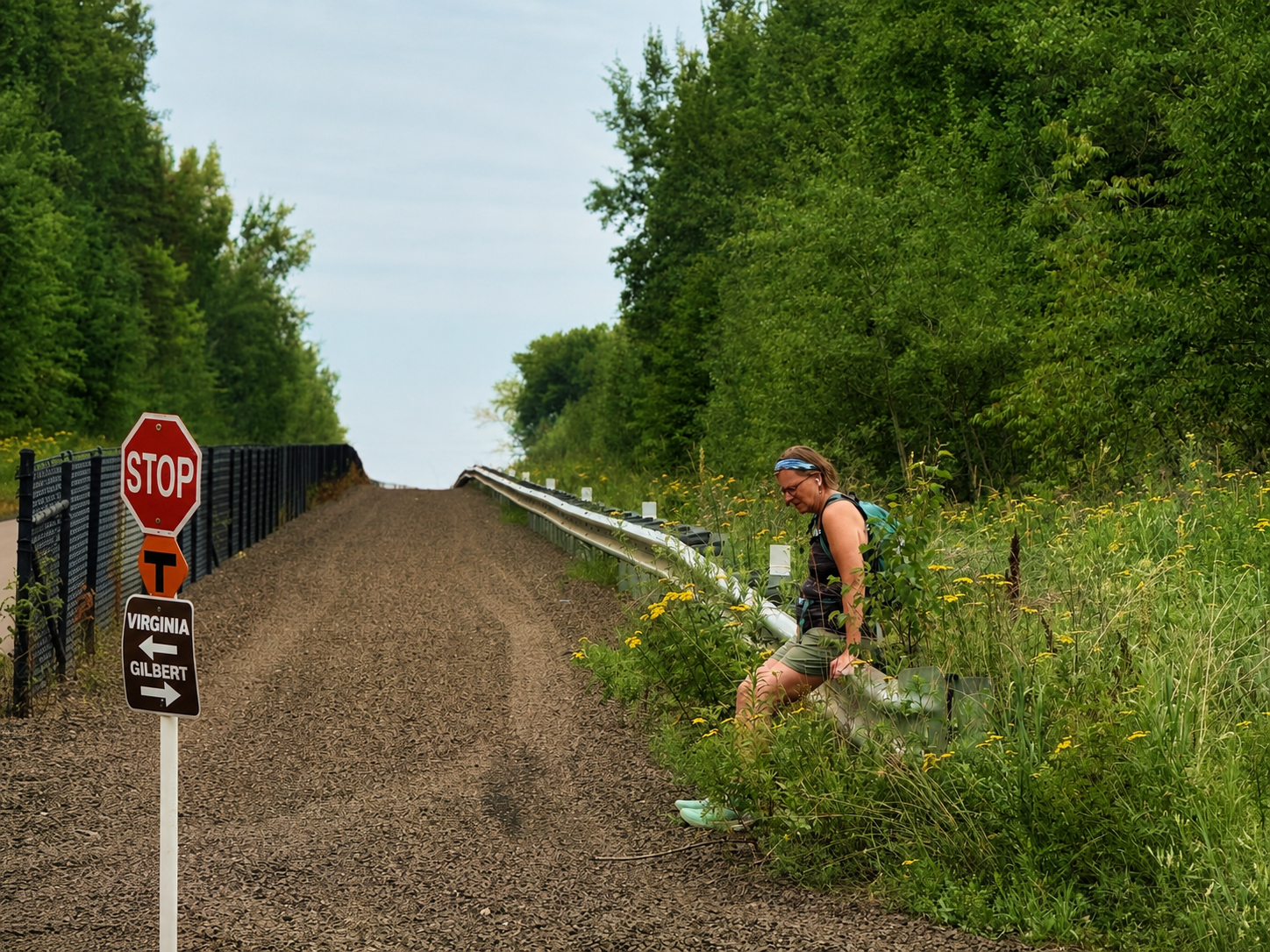
We took more frequent breaks, stopping to rest on boulders, benches, or railings wherever we could. Along the way, we offered polite hellos and exchanged a few words with other people walking the trail.
My feet were killing me. I didn’t really want my mom to know how much they hurt, as I’d been pretty indignant up to this point that these were the shoes I’d be taking on the Camino. I’d insisted they would be fine.
And they were fine… for shorter hikes.
But we still had a bridge to reach.
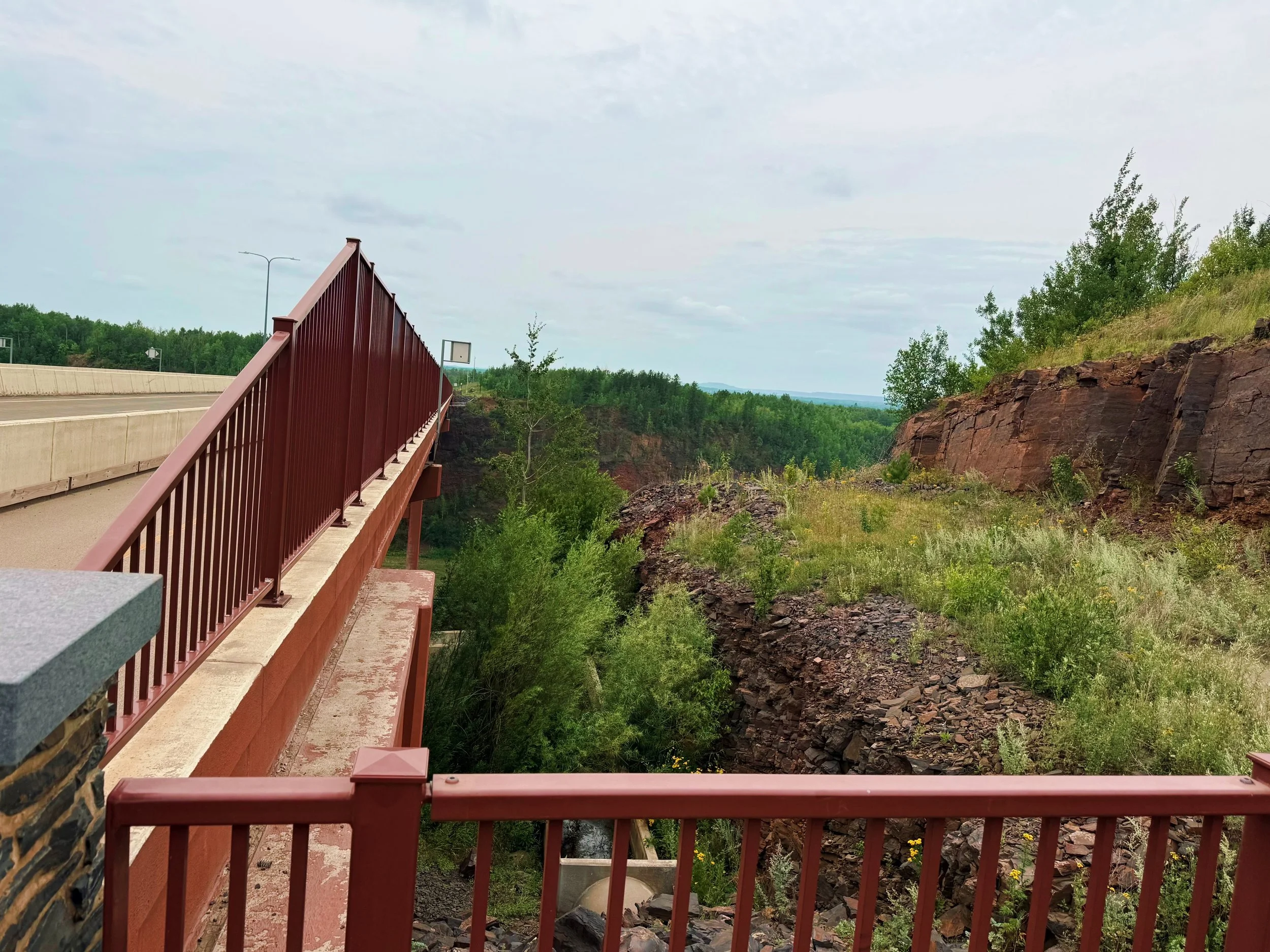
We spotted the water tower first, before seeing the unmistakable red iron of the bridge off in the distance. As we descended the hill alongside the highway, the landscape opened up before us into a sprawling mine pit. Cars raced by, unbothered by a couple of trail walkers on the path beside them.
As we approached the foot of the bridge, we had to stop and sit on the built-in concrete benches. We propped up our legs and stretched them out. I took a couple of Snapchat videos documenting just how sweaty and exhausted I was for absolutely no one who asked.
“Alright. Let’s do this.” We got ourselves up and pressed forward after a few minutes of rest.
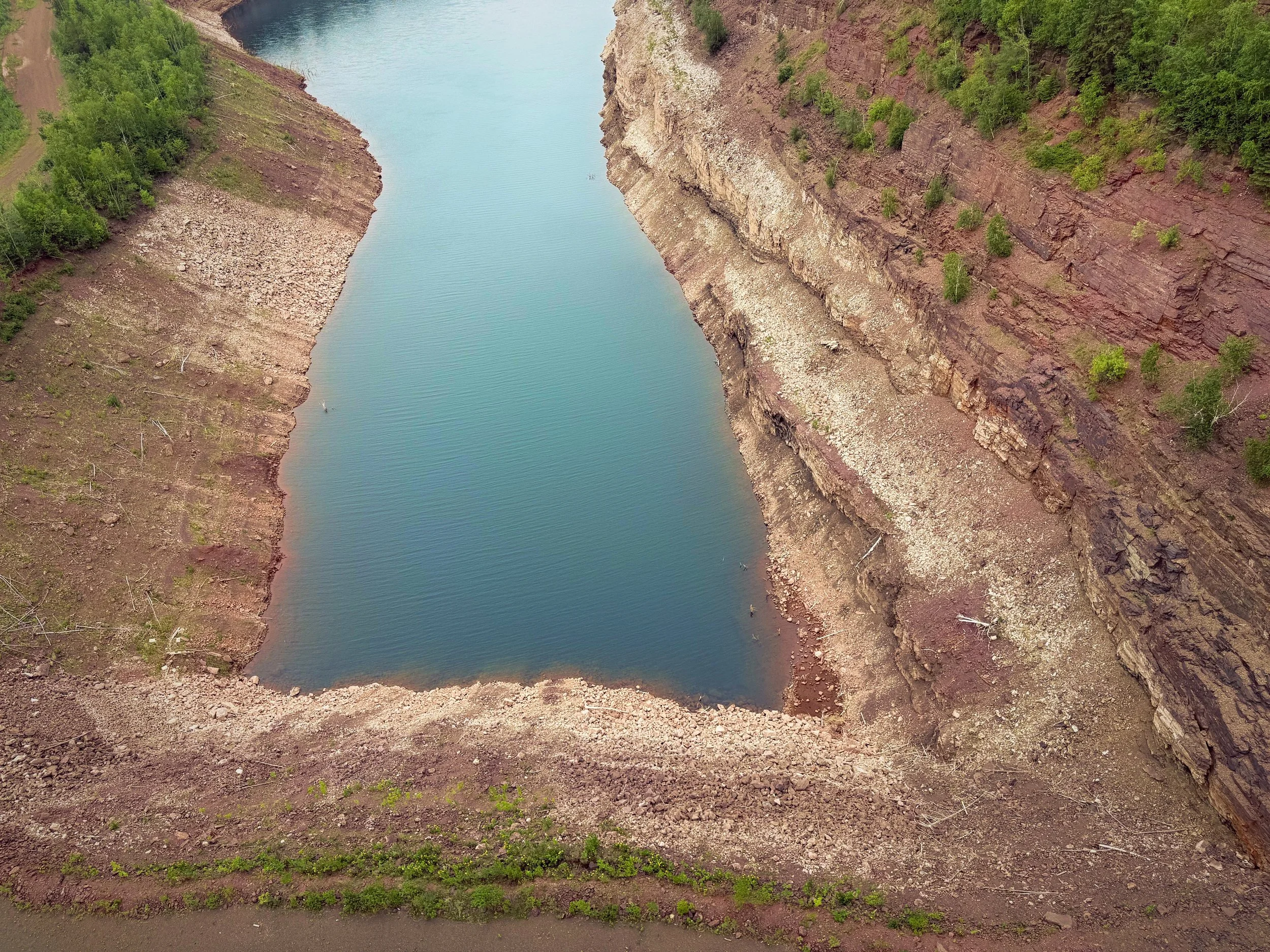
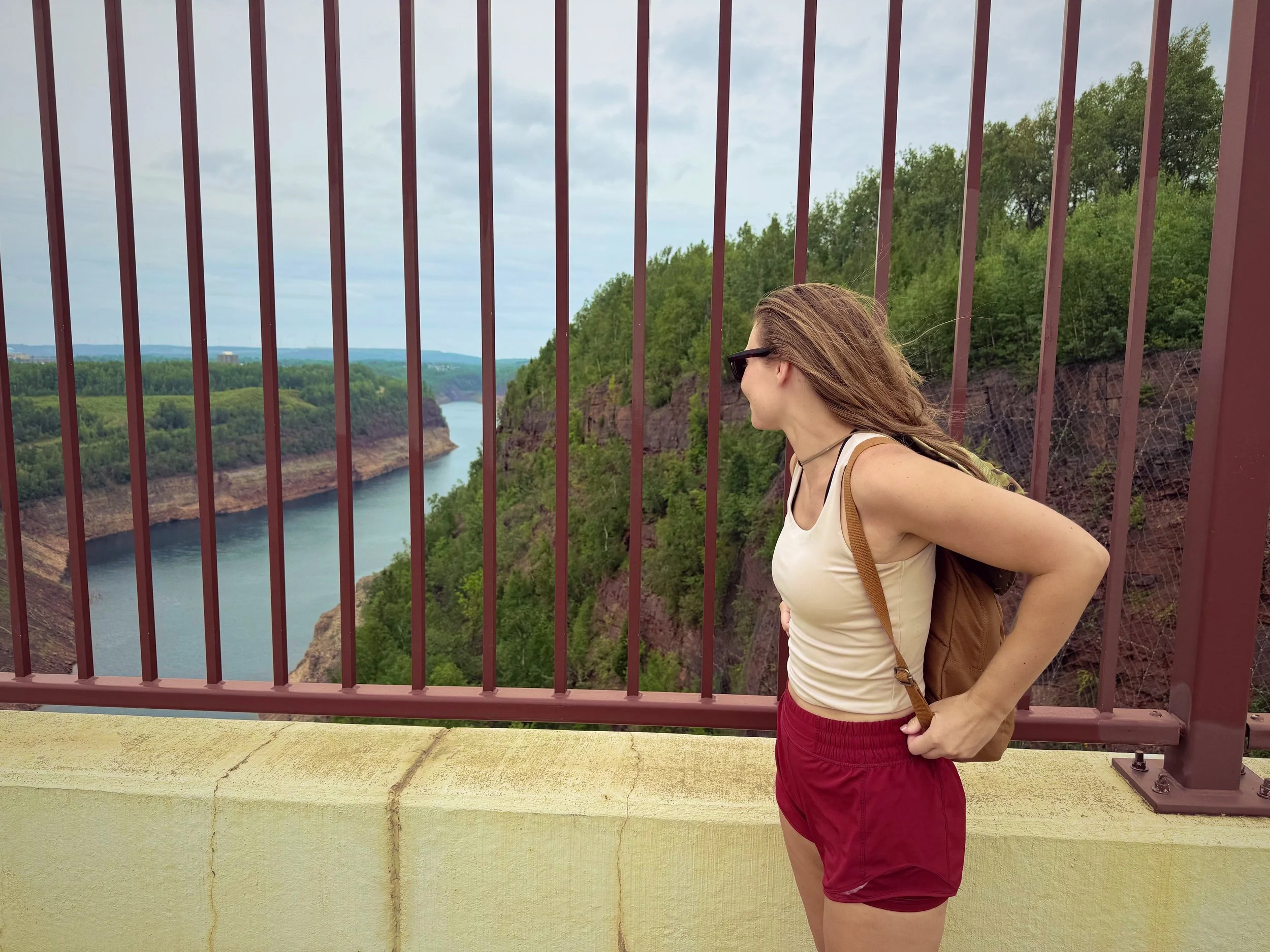
And then, just like that, the bridge was beneath our feet.
I’ve crossed that bridge by car dozens and dozens of times, looking out over that very same landscape from the backseat since I was a child. But something felt different about walking across it with my mom, here and now.
The wind whipped my hair around, matted from sweat. The soreness and aches of every mile pulsed through our hips, legs, and feet.
Walking that bridge felt like winning a prize.
I gazed down at the rich iron browns and reds and swirling blues of the giant mine pit below us, drinking it all in—completely enamored and mystified, just as I had been all those years ago.
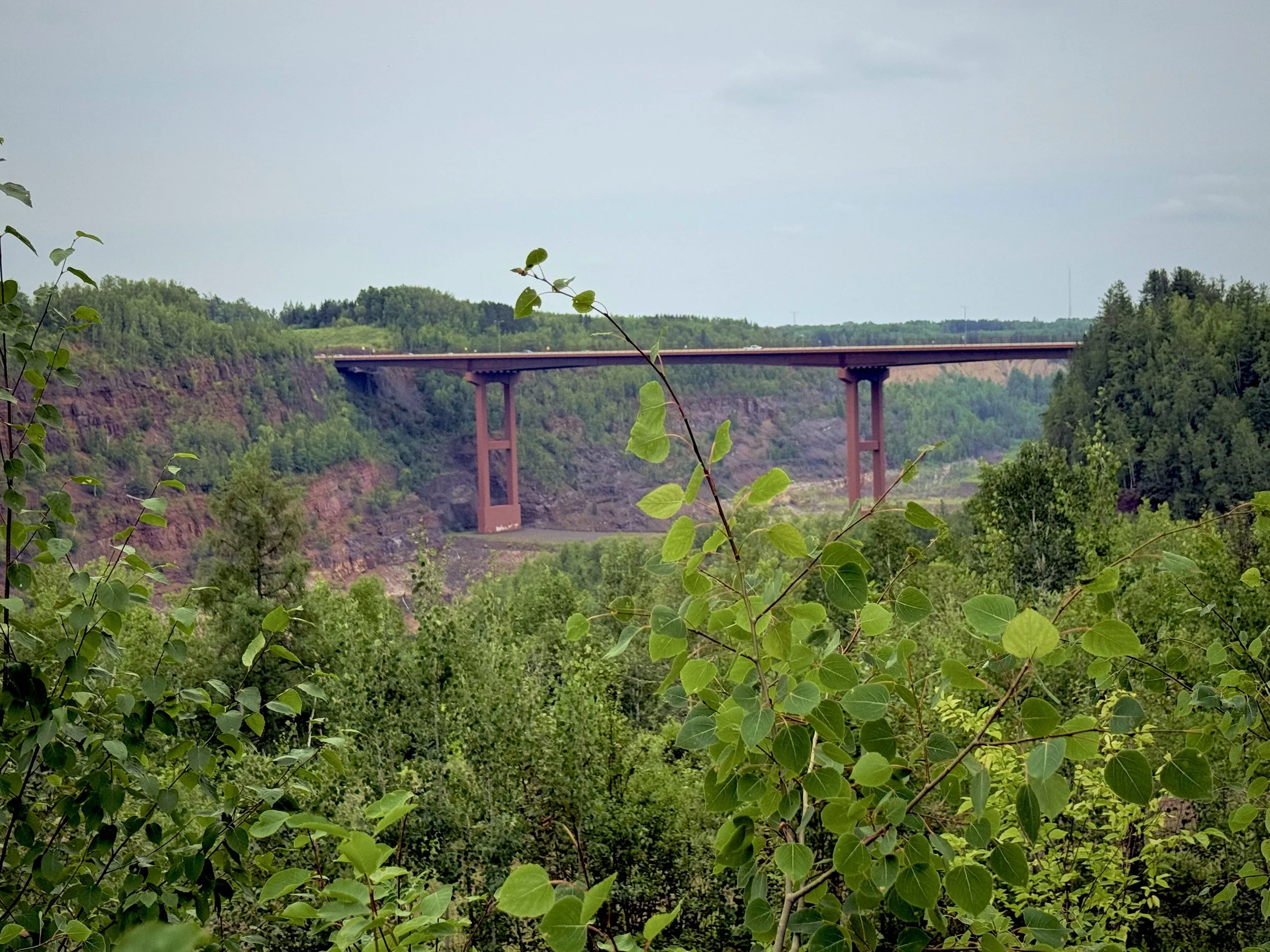
Virginia, MN
We straggled into Virginia like a couple of drifters. Bucket hats and backpacks. Dusty. Sweaty. And oh sooo thirsty.
I remembered my mom mentioning Canelake’s Candies, the old-fashioned candy shop downtown, which happened to be along our route back to my aunt and uncle’s.
“Do you think they’d have Diet Coke?” I asked my mom.
“Oh yes, definitely,” she said. “They make old-fashioned sodas there.”
Torn between stopping one more time and pushing through to get back, the allure of a cold, crispy Diet Coke won me over. We decided to pop in for a refreshment.
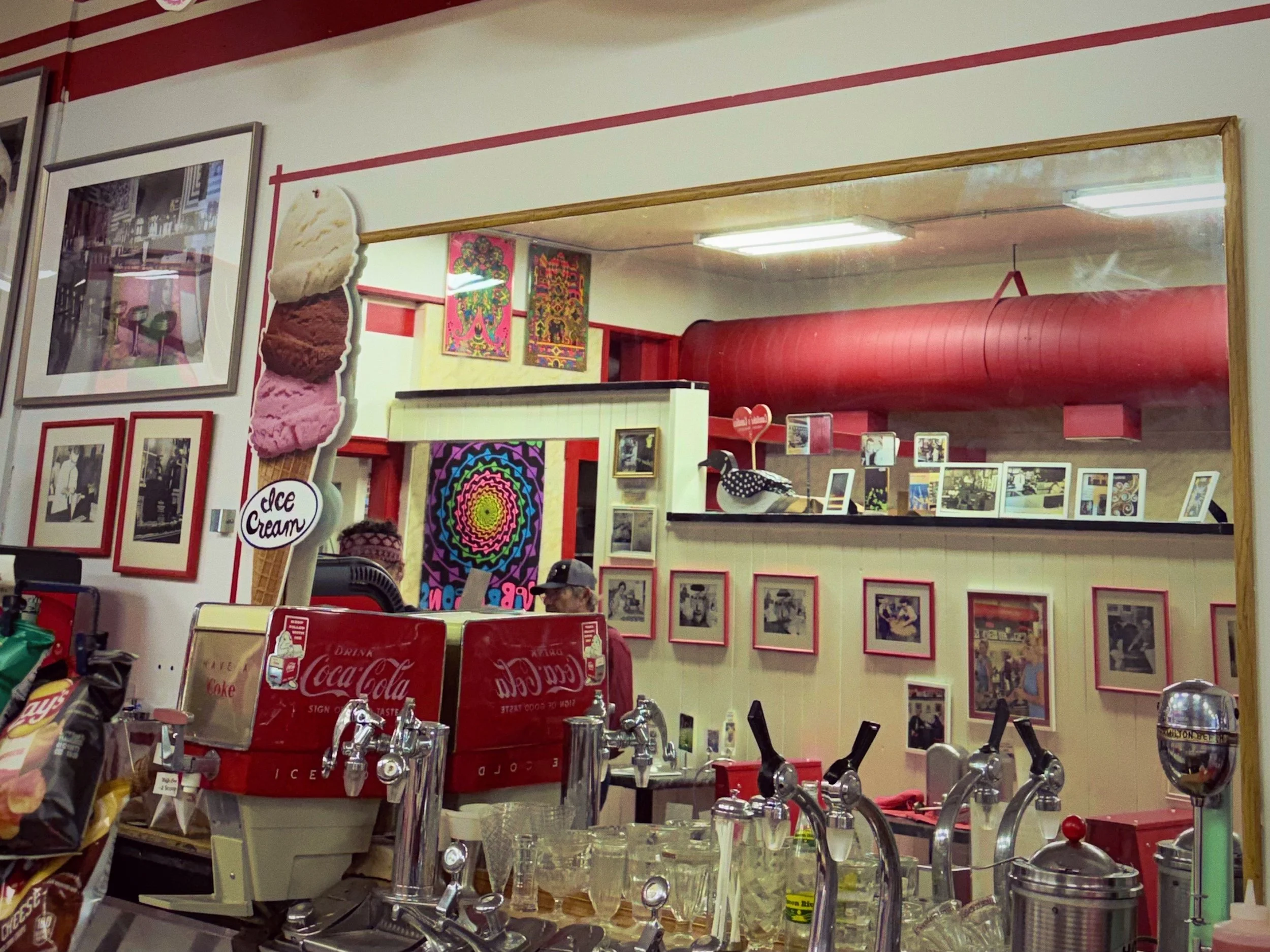
We sat down at the high-top counter, sticky and red-faced. I felt the need to tell our young server that we’d just walked from Eveleth, as if I had to justify looking and smelling the way we probably did.
He nodded and blinked his soft, kind eyes, almost knowingly, as if he could have guessed it just by looking at us. He seemed neither impressed nor curious. Just pleasant.
I ordered a Diet Coke with cherry syrup, and my mom ordered a peach soda. The first swig went down fast. Too fast.
“I’m gonna crush this,” I said aloud to my mom.
I sipped on my drink and flipped through a photo album sitting on the countertop, filled with old black-and-white photos of the family who owned the business and storefronts from downtown Virginia.
I wondered what my life—what my family’s life—would have been like if we’d stayed in this area. If we’d never moved to North Dakota.
It wasn’t a regretful thought, just curious. What would’ve been different? My mom and I likely wouldn’t be sitting here now, wandering through town like tourists. Would we still have found our way to this upcoming Camino trip?
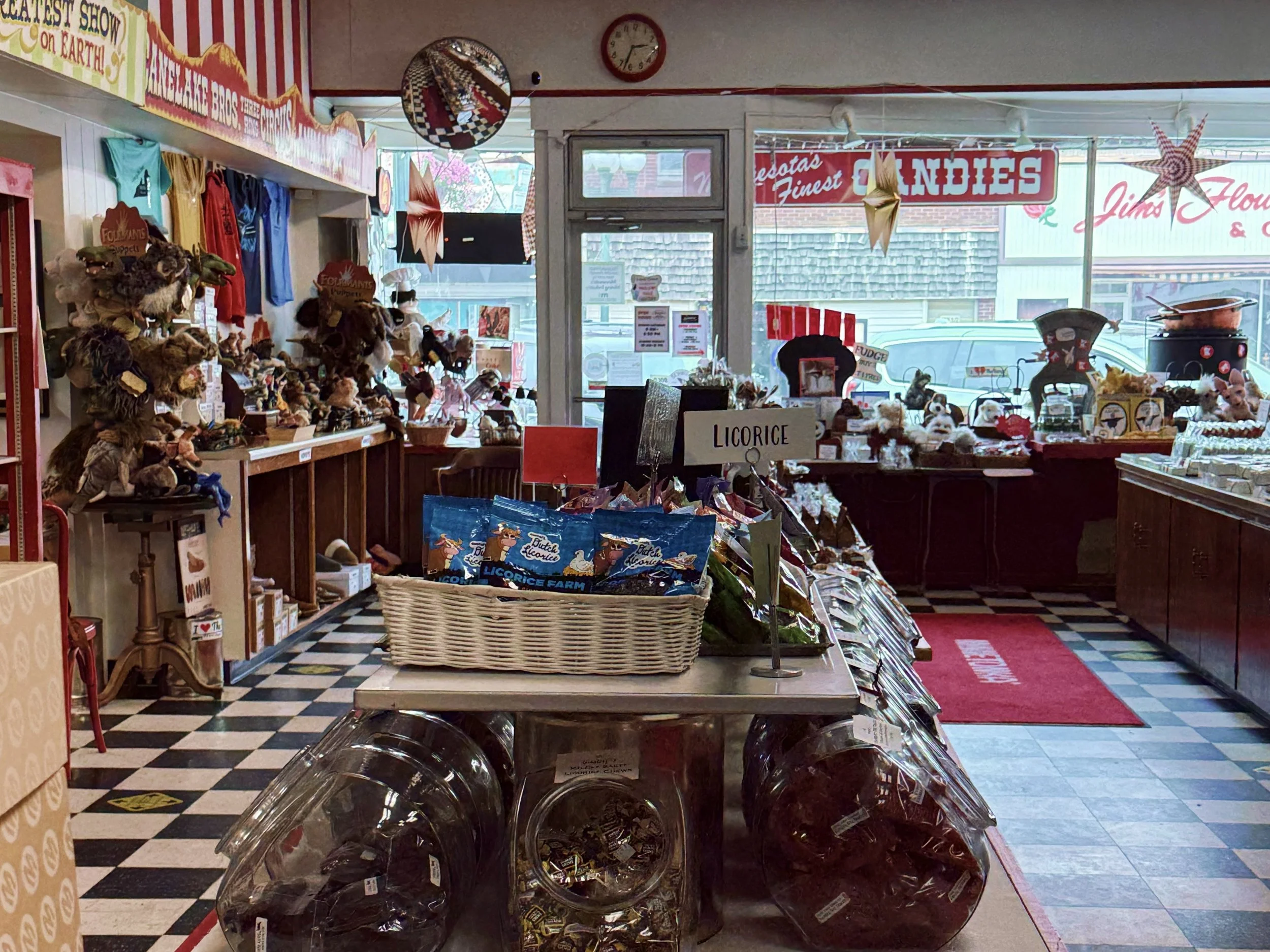
We finished our drinks and went to pay, adding a box of turtle chocolates as a little gift for my grandpa, who happens to love them.
We had only about a mile or so left to go, but the last stretch always seems like the longest.
I was scared to know what the blisters forming along my heels looked like. My feet were on fire.
“Do you think we can dip our feet in their pool when we get back?” I asked my mom.
“Oh, for sure,” she said. “In fact, I might just jump in all the way.”
We trudged on, block after block. My mom seemed to have a little more pep in her step than I did.
“It’s probably your shoes,” she said, noticing me lagging behind a little.
“Yeah. Maybe.”
We finally reached my aunt and uncle’s block. I recognized the alleyway that led to their back gate. We let ourselves in and immediately shed our shoes and socks before climbing into the little pool.
“Ahhhhhh.” I let the cool water soothe my hot, sore, blistered feet.
My mom, true to her word, immersed herself fully in the water.
“We earned this,” I exclaimed, wincing in pain as I struggled to steady myself on the uneven plastic pool floor.
We had done it.
We had walked twelve miles in roughly seven hours, with stops. It was like a walk back in time. Between the drive and the hike, I absorbed the family lore—memories, history, stories—all woven between whispering pines, winding roads, wise old rock cuts, and mineral-rich water.
As for the Camino, I think my mom and I were as ready as we could be. We proved we could go the distance—with snacks and breaks… and Diet Coke. We figured out which apparel and gear worked and which didn’t. (Yes, I got different shoes.)
Walking alone is one thing. When I’m training, it’s a kind of decompression from the day. A chance to put on my headphones, settle into my own thoughts, and just walk.
Walking with someone is completely different. It invites a new perspective. Different paces. Support. Conversation. Silence. The occasional complaint about your feet.
A friend has told me a quote over and over that has stuck with me. Something like: In your 20s, you think life is about the destination. In your 30s, you start to actually enjoy the journey. And eventually, you realize the best part of the journey is who you’re doing it with.
I’m only in my early 30s, but I think I definitely understand that now.